For years, companies have treated “knowledge” like a pile of gold in a vault, something to be captured, measured, and used to beat the competition. But as we move into 2026, that old model is showing its cracks. A new framework is emerging: Responsible Knowledge Management (rKM).
It isn’t just about being “smarter”; it is about being more ethical and aware of the systems we live in.
1. The Identity Crisis: What is KM, Anyway?
Knowledge Management (KM) didn’t start with a clear definition. It started as a reaction to a problem: organizations needed a way to share what their people knew so they could innovate faster. But the field has always struggled to define itself. Is it a tech project? A human resource strategy? A branch of economics? This ongoing “struggle to define” is exactly why so many KM projects fail they don’t know what they are trying to be.
2. The ‘DIKW’ Trap (Data, Information, Knowledge, Wisdom)
Most companies follow a pyramid model: you collect Data, turn it into Information, which becomes Knowledge, and eventually leads to Wisdom.
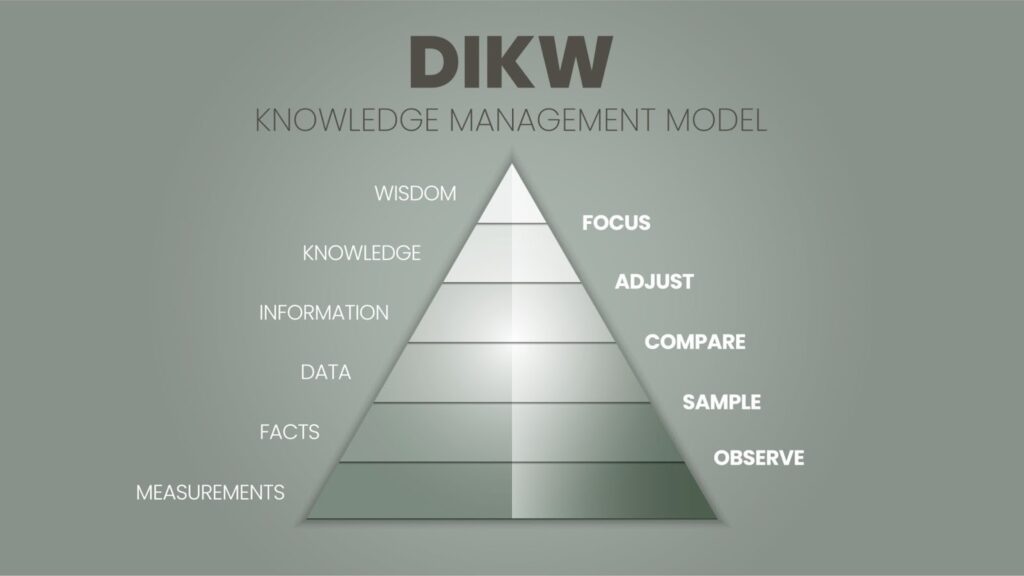
The problem? This model treats knowledge like a product on an assembly line. It ignores the messy, human “tacit” knowledge, the stuff you know but can’t easily write down. When you try to turn everything into a digital asset, you lose the “gut feeling” and the “lived experience” that actually make a business successful.
3. The Obsession with Metrics
The old way of KM has an “economic telos,” a fancy way of saying it only cares about the bottom line. If you can’t measure it with a KPI, the old system doesn’t value it. This “will to metrics” forces employees to focus on what looks good on a spreadsheet rather than what actually helps the team. It creates a vacuum where ethics are marginalized because they don’t have an immediate ROI.
4. A New Worldview: Systems Thinking
The emerging concept of rKM swaps the “spreadsheet mindset” for Systems Thinking. Instead of looking at parts of a business in isolation, we look at the whole “living” system.
- Wicked Problems: These are the complex, messy issues that don’t have a single “right” answer (like climate change or corporate culture).
- Post-Normal Science: This is a way of making decisions when the stakes are high, the facts are uncertain, and the values are in dispute. It puts ethics at the center of the conversation, not on the sidelines.
The Bottom Line
The old way of managing knowledge was about efficiency and competition. The new way responsible KM is about affirming life. It’s about recognizing that knowledge isn’t just a tool to make more money; it’s a social and ethical responsibility. If your system doesn’t account for the complex, human world we live in, it isn’t “knowledge management”; it’s just a data factory.
Also in review of The Paradox of Leadership: A Study on the Strategic Value of ‘Unknowingness.’