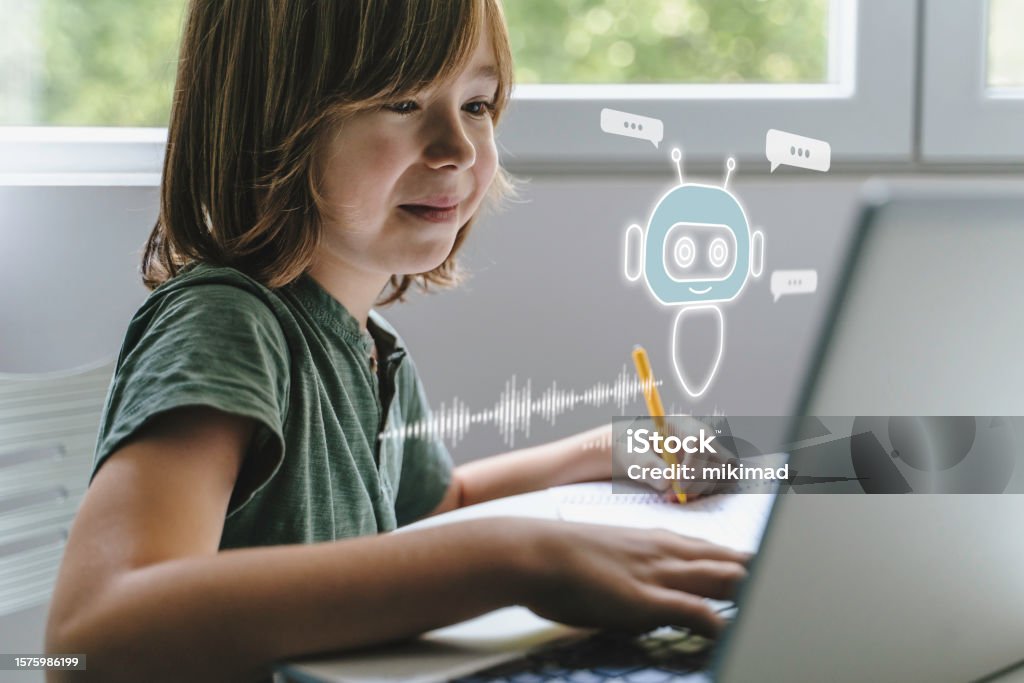
Since the introduction of artificial intelligence, learning has improved significantly, making it easier for students to use AI tools like ChatGPT, Gemini, Claude, and others as learning aids and changing how they learn for the better. With these tools, they can now get explanations, practice with difficult topics, and ask questions at almost any time. This does not mean that technology has replaced the traditional way of learning or the people who make learning meaningful. Instead, it provides an additional source of support for students when teachers, parents, or tutors are not immediately available.
How Artificial Intelligence Has Improved Education and Modern Learning
A recent OpenAI report shows how common this kind of learning has already become. According to the report, people of different ages have as many as 70 million conversations with ChatGPT every week, wherein they check what they know. These conversations test their understanding, identify mistakes, and help them know areas that require improvement. The figures suggest that people are not only using AI to get answers quickly; many are also using it to practice and assess their understanding.
AI-Powered Learning for Students
No two students may comprehend what they are being taught exactly the same, and that’s because we all have different levels of comprehension; for some people, you have to have an idea explained in different ways before it becomes clear. A teacher may explain a concept using one method, while an AI tool can provide an alternative explanation in simpler language or with a different example. The student can then keep asking questions until they get the most suitable explanation.
Benefits of AI for Teachers and Educators
The benefit of AI for teachers is that they can use it to create different versions of an assignment for students at different levels, generate practice questions, or develop lesson ideas. When used appropriately, it can give teachers more time to concentrate on the parts of their job that require human judgment, experience, and personal attention.
AI and Communication Between Schools and Families
The OpenAI report says that AI may be useful for communication between schools and families. Not every family speaks the same language at home, and school information can sometimes be difficult for parents to understand. Translating school messages into a familiar language could make it easier for parents to follow what is happening with their children’s education. It could also get more involved in supporting schoolwork at home.
Supporting Parents Through AI in Education
This is vital because education goes beyond the classroom. A child’s learning is influenced by what happens at home, at school, and during the hours in between. Parents may want to assist with homework but may find it difficult to understand a particular subject or communicate effectively with the school, and so, having access to translated information could make that support easier.
Practical Uses of Artificial Intelligence in Learning
The report also gives examples of students and teachers in the United States using AI in practical and creative ways. Their experiences show that the technology can serve different purposes depending on the person using it. One student might use it for extra practice before an examination, while another might use it to understand a difficult reading assignment. A teacher might use it to prepare classroom materials or reduce time spent on repetitive tasks. Meanwhile, technical projects often rely on systems that bridge data and culture to process large volumes of information efficiently.
Responsible Use of AI by Students
Still, there is a line that should not be ignored. Having access to an AI tool does not automatically mean that a person is learning. There is a major difference between asking a system to complete an assignment and using it to understand how to complete the assignment independently.
AI as a Learning Aid, Not a Shortcut
If a student simply copies an answer without first trying to understand or think, the technology may actually get in the way of learning. The student may finish the homework but still have no idea how to solve a similar problem without assistance. On the other hand, if that same student asks for an explanation, works through the steps, and then tries another question without help, AI can become a useful study ally.
The Role of Teachers in AI-Powered Education
Teachers play a very crucial role because teachers understand their students in ways an AI system can’t fully replicate, such as noticing when a student is lagging and needs a different approach to teaching. This emotional and psychological support is something technology cannot replace. Students themselves still have to put in some work, make mistakes, and develop the ability to think independently.
Continuous Learning Beyond the Classroom
The larger idea, however, is quite simple: learning need not stop when the classroom door closes.
A question can come up while doing homework at night. A student can become curious about something discussed earlier in the week. A teacher can realize that an assignment needs to be adapted for a particular group of students. A parent can receive a school message and need it explained in another language. In each situation, access to the right kind of support at the right moment can make a difference. As technology companies continue to scale their tools globally, such as when OpenAI expands its presence in Brazil, these support systems become available to even more communities.
How AI Makes Learning More Accessible
AI helps provide practice when a student needs more explanation or when a concept is unclear, and it assists when teachers lack time. Its value lies not simply in its ability to produce information quickly. Its greater potential may be in helping people keep learning between lessons, after school, and outside the traditional structures of education.
The Future of AI and Education
The future of education and AI lies in considering how they can work together without creating disadvantages. A situation where teachers continue to provide direction, judgment, and human connection, and AI provides additional support as needed, is a perfect sync for both the education system and AI. Professionals often lean on techniques such as generative AI to supercharge data summarization and quickly parse complex educational studies and reports.
Technology and the Future of Learning
Learning has always been a process that extends beyond the classroom. What is changing now is how easily people can access help during that process. If AI is used responsibly, it can give students more chances to practice, give teachers more time to teach, and give families better ways to participate in education.
The aim should not be having technology do the learning for us. It should be using it to make learning easier for people.